Prepared from the Kenya Energy Crops Policy Review Report for
stakeholder engagement, policy dialogue and online publication
Executive Summary
Kenya is undergoing a major clean cooking transition aimed at reducing reliance on traditional biomass fuels such as firewood and charcoal, which still dominate household energy use across rural and peri-urban areas. The transition is anchored in the Kenya National Cooking Transition Strategy (2024–2028), which targets universal access to clean cooking by 2028 through a diversified energy mix including LPG, bioethanol, electricity, and improved biomass systems.
Despite strong national policy frameworks, progress at the county level remains uneven due to affordability constraints, weak distribution systems, limited infrastructure, and slow commercialization of clean fuels. As a result, millions of households continue to face health risks from indoor air pollution and environmental degradation linked to unsustainable biomass use.
The Kenya Energy Crops Policy Review highlights clean cooking as a critical entry point for energy transition, with strong linkages to bioethanol development, biomass briquettes, biogas systems, and agricultural value chains. Counties such as Kilifi, Kisumu, Nakuru, Kajiado, and Nairobi demonstrate both high demand and strong potential for clean cooking systems supported by local energy crop production and waste-to-energy innovations.
Strengthening clean cooking systems will require coordinated investment in infrastructure, fuel supply chains, policy enforcement, and enterprise development to ensure affordability, accessibility, and sustainability.
County Context
Clean cooking in Kenya is shaped by diverse geographic, socio-economic, and energy access conditions across counties.
· Rural counties rely heavily on firewood and charcoal due to limited access to modern energy systems.
· ASAL counties such as Kilifi and Kajiado face high biomass dependence and environmental stress.
· Urban counties such as Nairobi and Kisumu face rising demand for affordable, clean, and safe cooking fuels due to population growth and informal settlement expansion.
· Agricultural counties such as Nakuru and Kisumu generate significant biomass residues that can support clean cooking fuel systems.
Across all counties, energy poverty and reliance on traditional fuels remain key challenges, particularly for low-income households and women, who bear the highest burden of fuel collection and indoor air pollution exposure.
Clean Cooking and Energy Situation in Kenya
Dependence on Traditional Biomass
Despite policy progress, a significant proportion of households still rely on:
· Firewood
· Charcoal
· Inefficient traditional cookstoves
This leads to:
· High levels of indoor air pollution
· Respiratory and cardiovascular health risks
· Accelerated deforestation
· Increased household energy expenditure
Charcoal remains a dominant urban fuel, while firewood dominates rural cooking systems, particularly in low-income and peri-urban settlements.
Emerging Clean Cooking Solutions
Kenya is experiencing gradual uptake of cleaner alternatives, including:
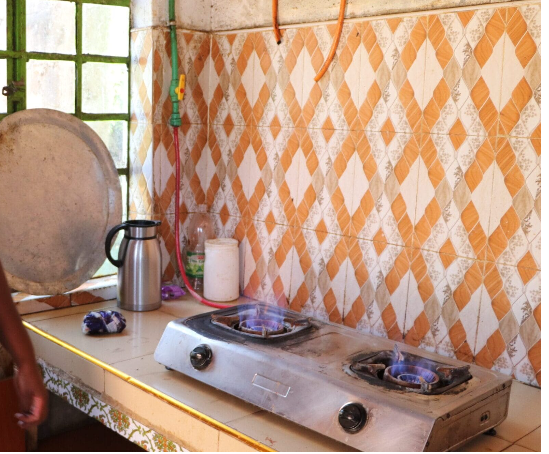
· LPG (Liquefied Petroleum Gas)
· Bioethanol fuel systems
· Biogas digesters
· Improved biomass cookstoves
· Electric cooking solutions (e-cooking)
· Biomass briquettes and pellets
The Kenya National Cooking Transition Strategy targets a mixed energy transition pathway consisting of:
· 50% LPG
· 30% bioethanol
· 10% electricity
· 10% biogas and sustainable biomass
Clean Cooking and Bioenergy Linkages
Clean cooking transition is closely linked to Kenya’s bioenergy and energy crop agenda. Key linkages include:
· Bioethanol production from sugarcane, cassava, and sorghum
· Biomass briquettes from agricultural residues
· Biogas systems from organic and livestock waste
· Sustainable charcoal from regulated production systems
Energy crop development is therefore central to long-term clean cooking sustainability.
Existing Policy and Institutional Frameworks
Clean cooking in Kenya is supported by a strong but fragmented policy environment:
Kenya Bioenergy Strategy (2020–2027)
Supports modernization of biomass systems, biofuel development, and clean cooking transition.
National Energy Policy (2025–2034)
Promotes renewable energy expansion, industrial efficiency, and decentralized clean energy systems.
Kenya National Cooking Transition Strategy (2024–2028)
Aims for universal clean cooking access by 2028 through LPG, bioethanol, electricity, and improved biomass technologies.
Energy Act (2019)
Mandates counties to develop County Energy Plans (CEPs) and promote local energy solutions.
Green Fiscal Incentives Framework (2024)
Provides tax incentives, subsidies, and green financing mechanisms for clean energy technologies including bioethanol and biogas.
Key Challenges Identified
1. Continued Dependence on Biomass
Many households still rely on firewood and charcoal due to affordability and accessibility constraints, particularly in rural and informal urban settlements.
2. Weak Fuel Supply and Distribution Systems
Clean fuels such as bioethanol and LPG face distribution gaps, especially in rural and peri-urban areas, limiting adoption.
3. High Cost of Clean Cooking Technologies
Initial costs of clean cookstoves, LPG systems, and electric cooking appliances remain unaffordable for low-income households.
4. Limited Commercialization of Bioenergy Fuels
Bioethanol, briquettes, and biogas systems remain underdeveloped due to weak investment, limited infrastructure, and fragmented supply chains.
5. Financing Constraints
SMEs and clean cooking enterprises face challenges accessing affordable financing, limiting scaling of distribution networks and production systems.
6. Institutional and Capacity Gaps
County governments face challenges in coordination, technical expertise, and data availability for effective clean cooking planning and implementation.
Opportunities for Clean Cooking Transition
1. Bioethanol as a Scalable Clean Fuel
Kenya’s bioethanol master plan provides a strong pathway for clean cooking fuel expansion using locally produced feedstock such as sugarcane, cassava, and sorghum.
2. Biomass Briquettes and Waste-to-Energy Systems
Agricultural and organic waste can support large-scale briquette production, reducing pressure on forests and improving urban energy access.
3. Women and Youth-Led Clean Energy Enterprises
Clean cooking value chains offer opportunities for women and youth in:
· Fuel distribution
· Stove manufacturing and retail
· Agro-processing and biomass production
4. Urban Clean Cooking Markets
Growing urban populations in Nairobi, Kisumu, and Nakuru create strong demand for:
· LPG and bioethanol fuels
· Improved cookstoves
· Clean energy retail networks
5. Agricultural Integration
Energy crop production in counties such as Kilifi and Kisumu can directly support clean cooking fuel supply chains while strengthening rural livelihoods.
Policy Recommendations
1. Expand Clean Cooking Infrastructure
Invest in:
· Fuel distribution networks (bioethanol, LPG, briquettes)
· Decentralized clean cooking hubs
· Retail and last-mile delivery systems
2. Promote Bioethanol as a National Clean Cooking Fuel
Scale up:
· Domestic production of bioethanol
· Blending and distribution systems
· Fiscal incentives such as VAT exemptions
3. Strengthen Biomass Transition Systems
Support:
· Efficient cookstoves
· Sustainable charcoal production systems
· Biomass briquette commercialization
4. Improve Financing for Clean Cooking Enterprises
Expand access to:
· Green financing mechanisms
· SME credit facilities
· Carbon finance opportunities
· Women and youth enterprise funds
5. Strengthen County-Level Energy Planning
Counties should:
· Fully implement County Energy Plans (CEPs)
· Integrate clean cooking into CIDPs and ADPs
· Improve energy data systems for planning and monitoring
6. Promote Public–Private Partnerships
Encourage collaboration between:
· County governments
· Private sector energy companies
· Development partners
· Research institutions
to accelerate innovation and scale-up.
Conclusion
Kenya’s clean cooking transition represents one of the most important pillars of the national energy transformation agenda. While strong policy frameworks already exist, implementation gaps at county level continue to slow progress.
Clean cooking offers significant benefits including improved public health, reduced environmental degradation, lower household energy costs, and expanded economic opportunities through bioenergy value chains.
By strengthening infrastructure, financing, institutional coordination, and local enterprise development, Kenya can accelerate the shift toward universal access to clean cooking by 2028 while supporting inclusive green economic growth.